From Prompt Engineering to Graph Engineering
I have been building and operating AI workflows in practical use for the last couple of years.
During this time, I have seen AI engineering evolve through several distinct layers:
Prompt engineering. Context engineering. Harness engineering. Loop engineering. And now, graph engineering.
These are not replacements for one another. They are layers that build on top of each other.
Prompt engineering focuses on improving a single model interaction through better instructions, examples, constraints, and output formats.
Context engineering asks a larger question: what information, tools, memory, and instructions should the model receive at each step? The objective is not to provide more context, but the right context.
Harness engineering moves beyond the model itself. It designs the environment in which an agent operates—its tools, permissions, filesystem, state, tests, observability, feedback mechanisms, and recovery paths. The agent may generate the output, but the harness determines what it can see, what it can do, and how its work is evaluated.
Loop engineering introduces repetition.
An agent no longer produces one answer and stops. It follows a controlled cycle:
Goal → Action → Observation → Adjustment
A reliable loop needs a clear objective, verification method, budget, memory, failure handling, and stopping condition. Without these controls, autonomy quickly becomes uncontrolled repetition.
The next layer is graph engineering.
A graph is a system of connected nodes and edges. In an AI workflow, each node may represent an LLM call, a tool, a database operation, a deterministic function, an evaluator, or a human approval step.
The edges define how work and state move between those nodes.
This changes the architecture significantly.
Instead of asking one agent to solve a complex problem inside a single expanding context window, we can divide the problem into smaller stages:
- One node researches.
- Another validates the sources.
- A third synthesizes the findings.
- A fourth evaluates the draft.
- A deterministic node formats or stores the result.
- A human gate approves any irreversible action.
Some nodes can run in parallel. Others can branch based on conditions. Failed steps can be retried without restarting the entire workflow. State can be checkpointed, inspected, and replayed.
A Directed Acyclic Graph is useful for workflows that should move forward through fixed stages. But real agent systems may also need controlled loops for retry, evaluation, and correction. The important principle is not whether the graph is strictly linear. It is whether the transitions are explicit, bounded, observable, and governed.
Graph engineering is therefore not simply about adding more agents.
It is about designing the topology of intelligence:
- What is the responsibility of each node?
- What context does it receive?
- What state does it produce?
- Which assumptions must be verified?
- Which transitions are deterministic?
- Where does the workflow stop or escalate?
The evolution of AI engineering is a shift in the unit of design.
We started by engineering prompts. Then we engineered context. Then the execution environment. Then the feedback loop. Now we are engineering the entire graph through which intelligence, state, and decisions flow.
The future of AI engineering will depend less on creating isolated clever agents and more on building reliable systems around them.
You should also read:
How to Reduce Claude Code Token Waste Without Lowering Your Engineering Standards
Practical lessons from building a personal operating system with AI agents, local models, and automated workflows. There is an awkward moment when you are halfway through building something, the work is progressing, and Claude tells…
Continue reading...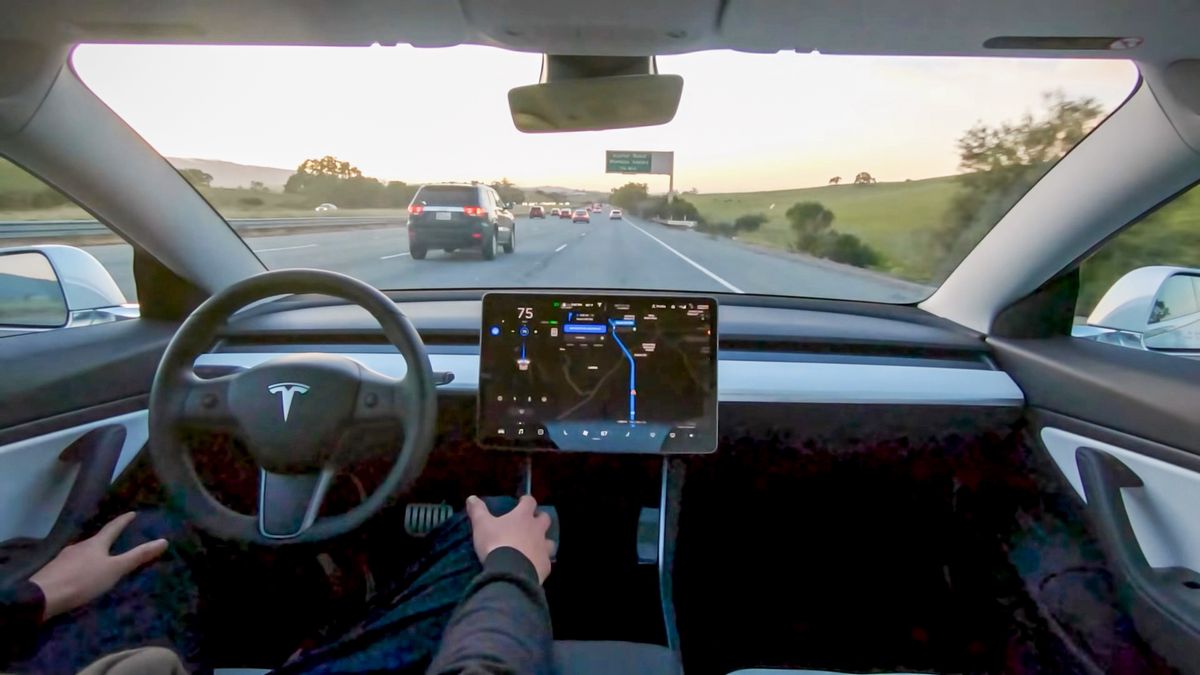
AI as the Key Competitive Advantage: Lessons from Tesla and a Roadmap for Bangladesh
Introduction Elon Musk recently tested a new self-driving feature for Tesla cars in a live stream on YouTube. In the live stream, Musk showed the car driving through a variety of different scenarios, including navigating…
Continue reading...